Radon and Crawl Spaces: EPA Zones and What They Mean
Radon is a radioactive gas from uranium in soil and rock. It enters houses through the ground, and a crawl space is the part of the house closest to the ground.
What the EPA zones are
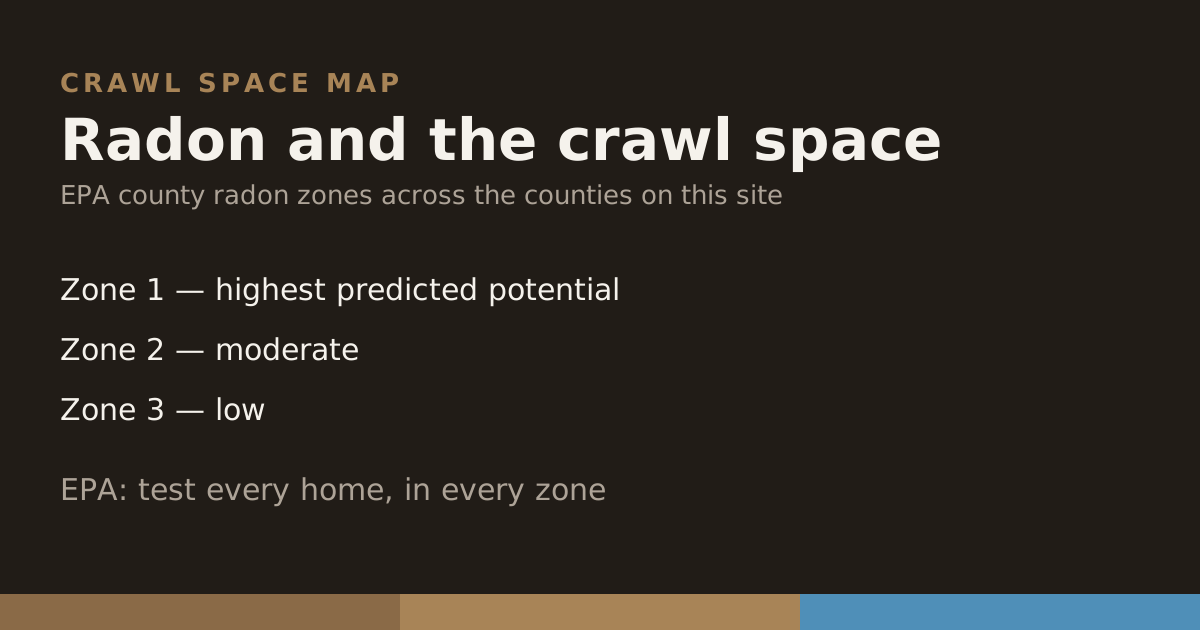
EPA's Map of Radon Zones assigns every county to one of three zones by predicted average indoor radon: zone 1 is the highest potential, zone 2 moderate, zone 3 low. Each county page on this site shows its zone; 2,680 of the 2,722 counties here have one.
What they are not
EPA is explicit that the map must not be used to decide whether to test a home. Elevated levels have been found in all three zones, and two houses next to each other can differ by a factor of ten. The zone is a statement about a county; only a test is a statement about a house.
Why encapsulation and radon venting meet
A radon mitigation system for a crawl space is, in its essentials, a sealed membrane over the soil with a fan drawing air from beneath it and venting it above the roof. An encapsulated crawl space is a sealed membrane over the soil with its seams lapped 6 inches and turned 6 inches up the walls. The two share the liner and the sealing; adding a suction point and a fan to an encapsulation is far cheaper than retrofitting one later.
So in any county — and especially in zone 1 — the order is: test for radon, then design the crawl-space work. A short-term test takes two to seven days.
Washington's version of R408 makes the link explicit: if installed vent area is reduced below 1 in 300, a radon vent is required.
Testing in a crawl-space house
Test in the lowest lived-in level, not in the crawl space itself — the crawl space will almost always read high, and it is the air you breathe that matters. Use a short-term test for a first look and a long-term test (90 days or more) before deciding on mitigation if the short-term result is near the action level. If you encapsulate, test again afterwards: sealing the floor often lowers radon on its own, and sometimes changes it the other way by altering how the house draws air from below.